.avif)
How To Avoid Scams
Have you received an email from a world leader asking you to help save their country by purchasing $5,000 in Walmart gift cards? Unfortunately, scams aren’t always this easy to spot. To help, we’ve put together a guide on how to avoid them.

Greed: The "Get Rich Quick" Plans
No one can afford to get swindled by a get rich quick scam. Over the years we’ve seen plenty of folks who’ve felt unprepared for retirement and out of desperation, are searching for returns that are too good to be true. These folks are more susceptible to being scammed.
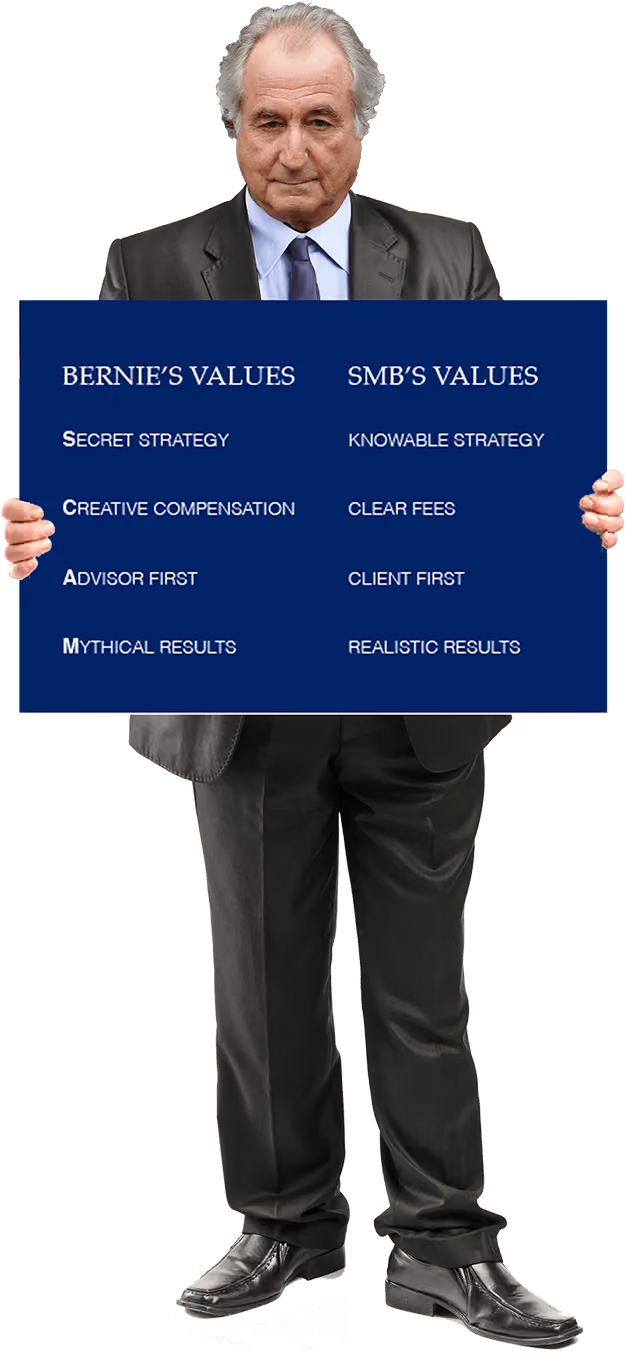
The biggest scammer of all time is Bernie Madoff, who pulled off a $65B ponzi scheme. We use him to help us educate others on how to avoid being scammed:
Secret Strategy
When people would ask Bernie how he invested he would say, "just trust me." That's a red flag! You need to know and understand what the investment strategy is, even if you don't know every detail. Make the advisor explain it regularly.
Creative Compensation
You could say Bernie's pay was creative. He didn't let those pesky fee agreements keep him from helping himself to whatever fees he wanted. You need to know what the total fees are in the investment, including what the advisor gets paid.
Advisor First
Make sure the advisor has YOUR best interests in mind, not theirs. Bernie clearly had his interests in mind over the client's. Still today, many advisors will suggest inferior investments because they pay higher commission. That's an example of putting their interests ahead of yours. Make sure your advisor is a fiduciary, which means they are legally obligated to act in your best interest ahead of their own. You can check your advisor at www.brokercheck.finra.org.
Mythical Results
It pays to be skeptical in investing. If something sounds too good to be true (like the story of a client who was told the Iraqi Dinar was revaluing 10,000% higher), it's probably a scam! No investment is perfect. Every legitimate investment has a downside and you need to know what it is.
Gluttony: Beware of Overcharging & Hidden Fees
Instead of over-eating, financial advisor gluttony is over-charging. This happens in many different ways. One example is an advisor who makes a large commission for a couple of hours of paperwork, then never speaks to you again. Another example is some annuity products we’ve seen with too many hands in the pot. After the insurance company, advisor, and investment company all take their share, the client can be stuck with a fee 3 times the normal amount!
Many people have no idea how much they’ve paid for investments. This may sound obvious, but one way to avoid paying excessive fees is to ask how much you’re paying.
How Advisors Get Paid
One of our favorite clients came in for an initial meeting, sat down, folded his arms and said, “How much is this costing me right now!” Believe it or not, it’s actually rude to yourself not to ask (but you may be able to find a more tactful way to bring it up). Before working with an advisor, it's important to understand how they are getting paid. We've listed the three most common fee structures.
Commission: Financial One-night Stand
Annuity salespeople can receive 3-10% up front. The longer the lock-up, the larger the commission. Mutual Fund salespeople can receive up to 5% up front and the client starts with a loss. Stockbrokers charge a percentage of each trade cost. “Do I need this stock or does he need new golf clubs?”
Asset-Based Fees: Ongoing relationship
Instead of large up-front commissions, smaller ongoing fees around 1% (or less) per year. Interests are aligned - both the advisor and the client want the account to grow.
Financial Plan Fee: Do it yourself
Advisors charge an hourly rate for a financial plan. Rates vary, but financial plans are typically thousands of dollars.
Additional Insights
Market reports full of charts, graphs, and jargon have a way of making things even more confusing. In our insights, Tim covers the topics that actually matter to you, in plain language you don't need a finance degree to understand.